U.S. Coast Guard Cutter Stratton Conducts a Trilateral Engagement with Japan and Philippine Coast Guards
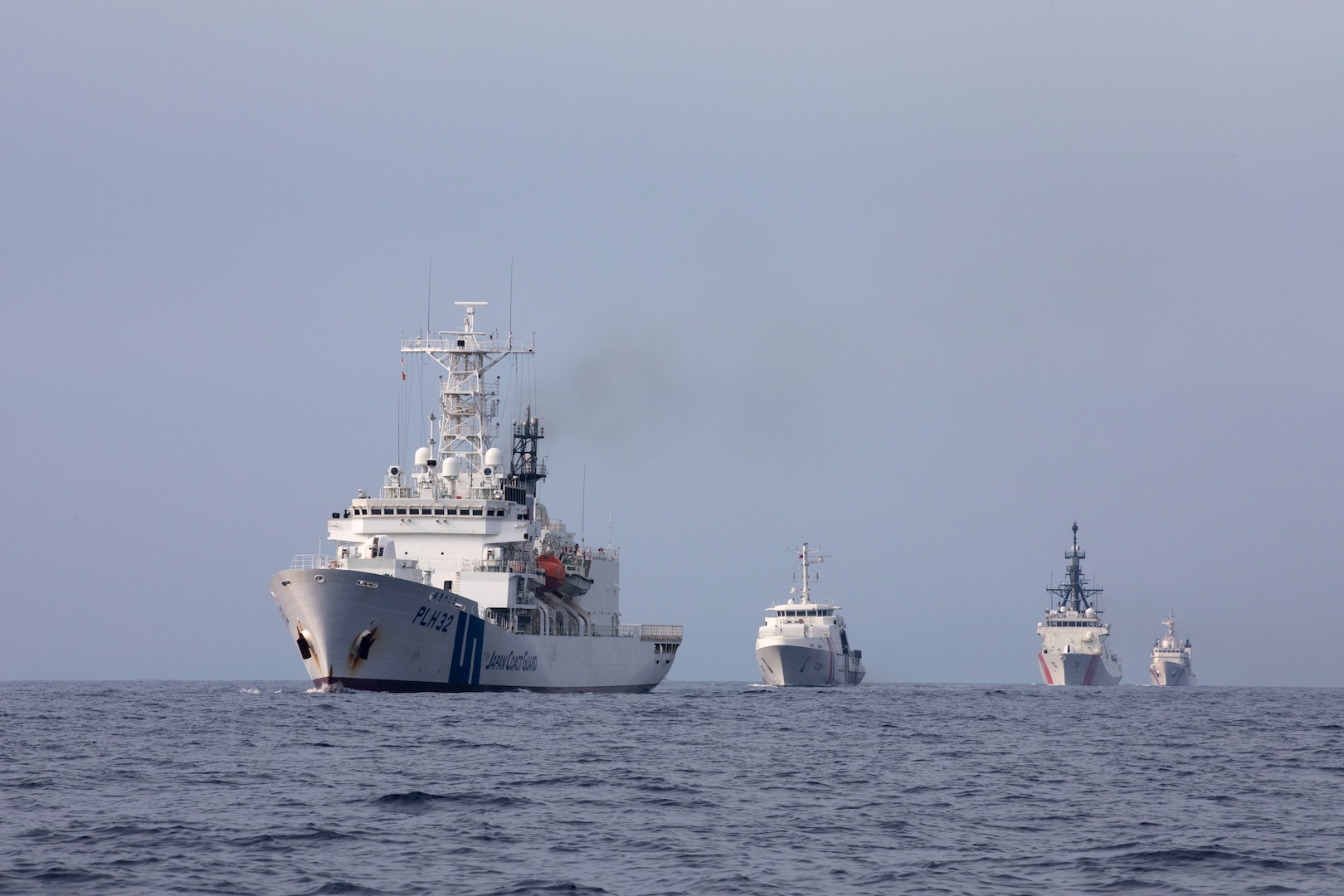
(From left) Japan Coast Guard Vessel Akitsushima (PLH 32), U.S. Coast Guard Cutter Stratton (WMSL 752), Philippine Coast Guard vessels BRP Gabriela Silang (OPV 8301) and BRP Melchora Aquino (MRRV-9702) conduct a trilateral engagement in the South China Sea June 5, 2023. Stratton deployed to the Western Pacific to conduct engagements with regional allies and partner nations, reinforcing a rules-based order in the maritime domain. (U.S. Navy photo by Chief Petty Officer Brett Cote)
Philippine, Japan and U.S. Coast Guards render honors following
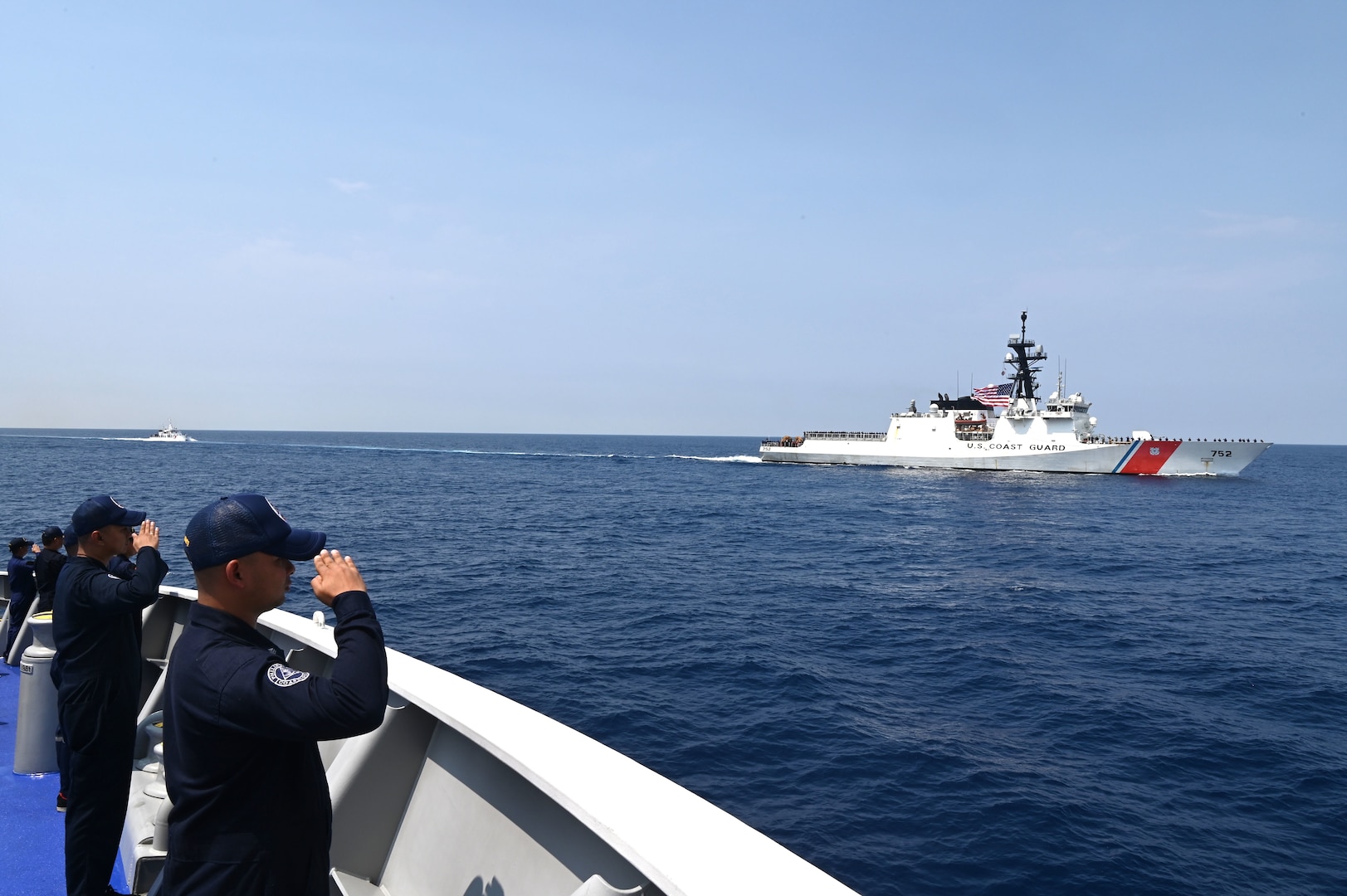
Crewmembers aboard the Philippine Coast Guard Vessel Melchora Aquino (MRRV-9702) render hand salutes as the U.S. Coast Guard Cutter Stratton (WMSL 752) approaches in the South China Sea, June 7, 2023. Stratton deployed to the Western Pacific to conduct engagements with regional allies and partner nations, reinforcing a rules-based order in the maritime domain. (U.S. Coast Guard photo by Chief Petty Officer Matt Masaschi)
U.S. Coast Guard Cutter Stratton Conducts a Trilateral Engagemen
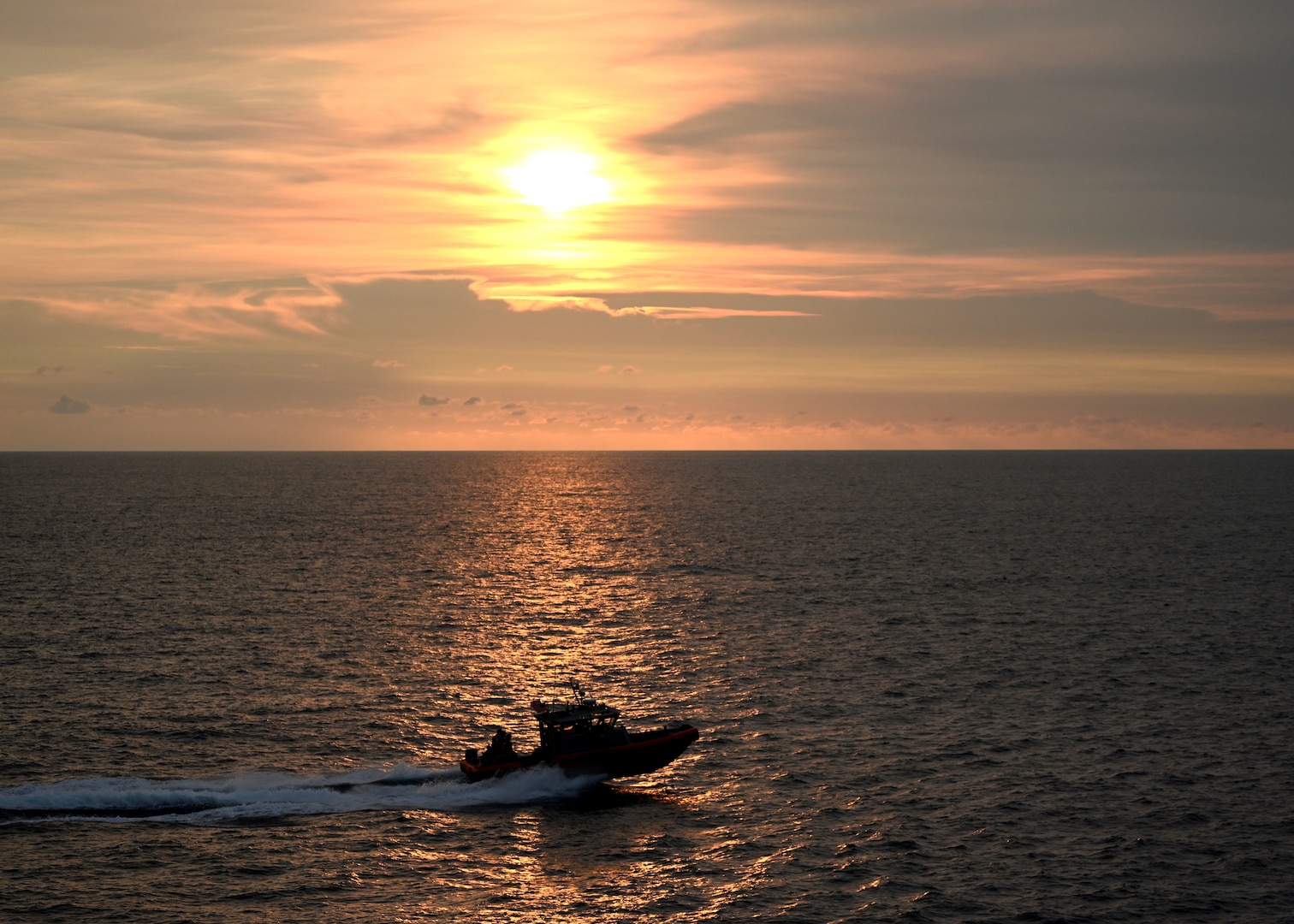
A U.S. Coast Guard Cutter Stratton (WMSL 752) boat crew aboard the cutter’s 35-foot long range interceptor transits the South China Sea while the U.S., Japan and Philippine Coast Guards conduct combined operations, June 5, 2023. Stratton’s crew are participating in the first trilateral engagements between the sea services while deployed to the Western Pacific to operate with regional allies and partner nations, reinforcing a rules-based order and maritime governance to promote a free and open Indo-Pacific. (U.S. Coast Guard photo by Chief Petty Officer Matt Masaschi)
Philippine Coast Guard Hosts Women in Maritime Law Enforcement Special Interest Exchange
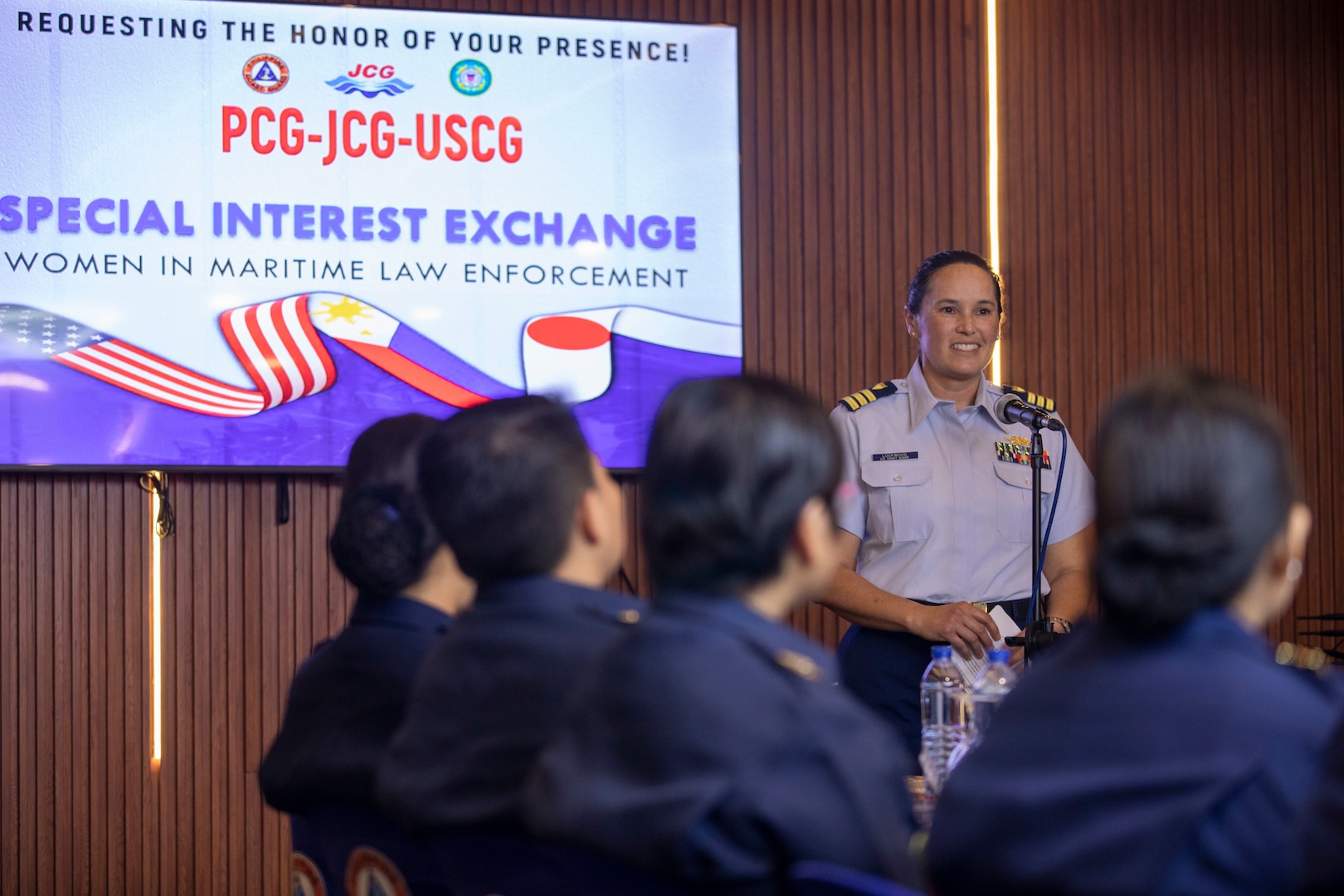
Cmdr. Amy Lockwood, executive officer of U.S. Coast Guard Cutter Stratton (WMSL 752), speaks to members of the U.S., Japan, and Philippines coast guards at a special interest exchange focused on women in maritime law enforcement held in Manila, Philippines, June 3, 2023. Stratton deployed to the Western Pacific under U.S. Navy 7th Fleet command to serve as a non-escalatory asset for the promotion of a rules-based order in the maritime domain by engaging with partner nations and allies in the region. (U.S. Navy photo by Chief Petty Officer Brett Cote)
U.S., Japan and Philippine Coast Guard servicemembers conduct be
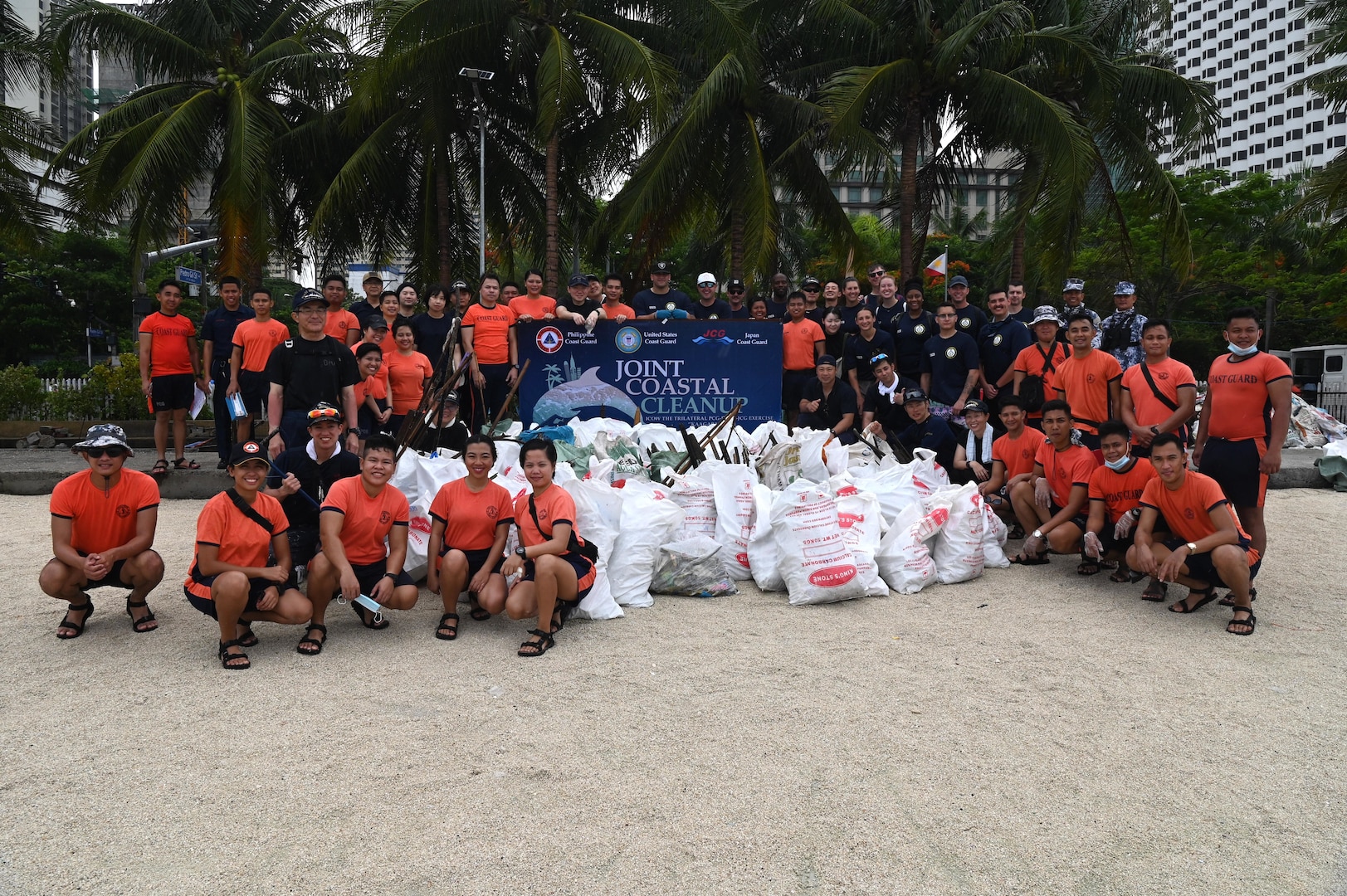
U.S. Coast Guard Cutter Stratton (WMSL 752) servicemembers pose with members from the Japan, and Philippine coast guards next to trash they collectively cleaned up during a community relations event in Manila, Philippines, June 2, 2023. Stratton deployed to the Western Pacific to engage with regional allies and partner nations, reinforcing a rules-based order and maritime governance to promote a free and open Indo-Pacific. (U.S. Coast Guard photo by Chief Petty Officer Matt Masaschi)
Philippine Coast Guard hosts fellowship reception for U. S. and
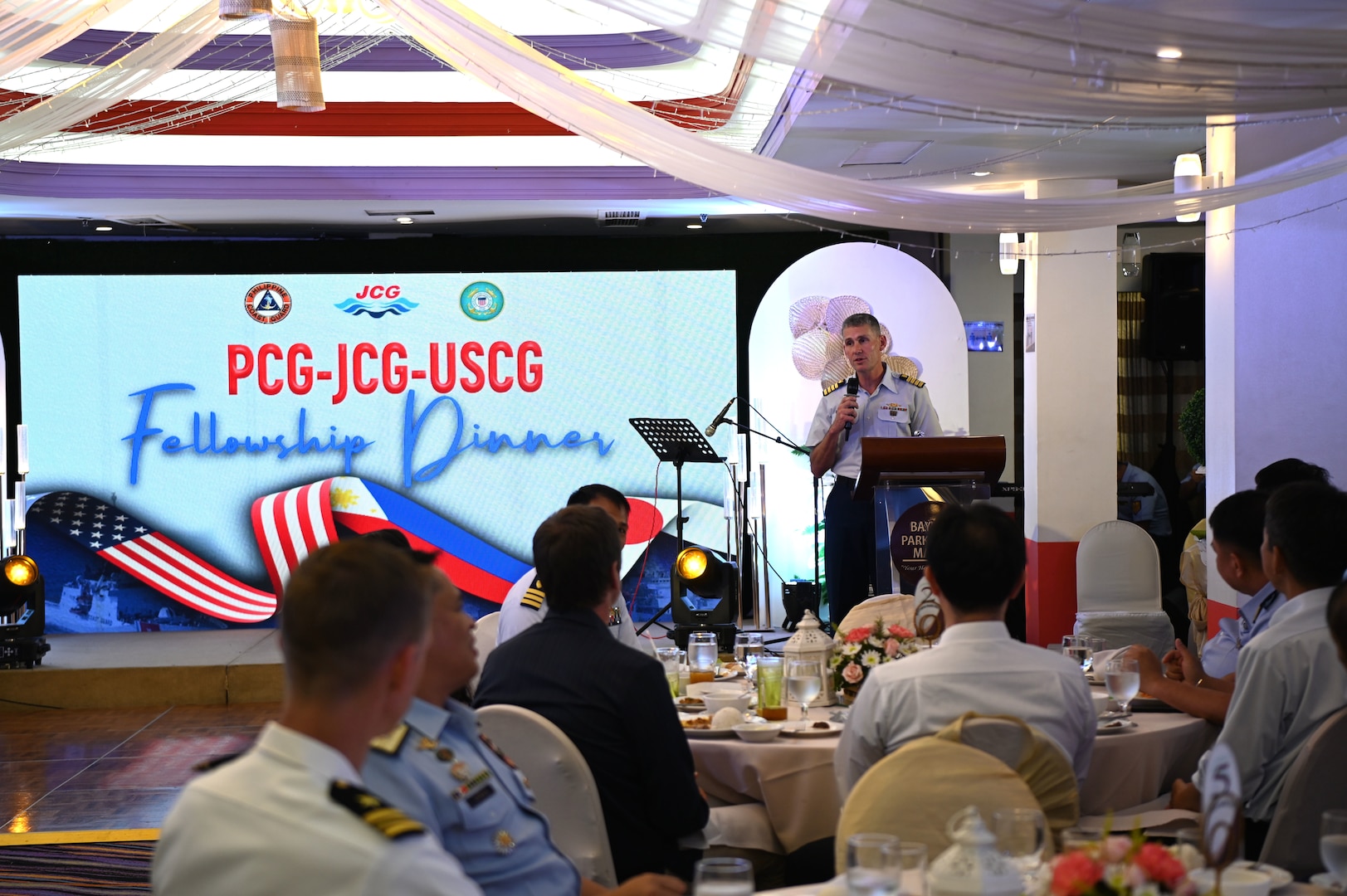
Capt. Brian Krautler, U.S. Coast Guard Cutter Stratton's (WMSL 752) commanding officer, speaks to servicemembers from the Japan Coast Guard Vessel Akitsushima (PLH 32) and the Philippine Coast Guard during a fellowship dinner in Manila, Philippines, June 1, 2023. Stratton deployed to the Western Pacific to engage with regional allies and partner nations, reinforcing a rules-based order and maritime governance to promote a free and open Indo-Pacific. (U.S. Coast Guard photo by Chief Petty Officer Matt Masaschi)
U.S. Coast Guard Cutter Stratton Conducts a Trilateral Engagemen
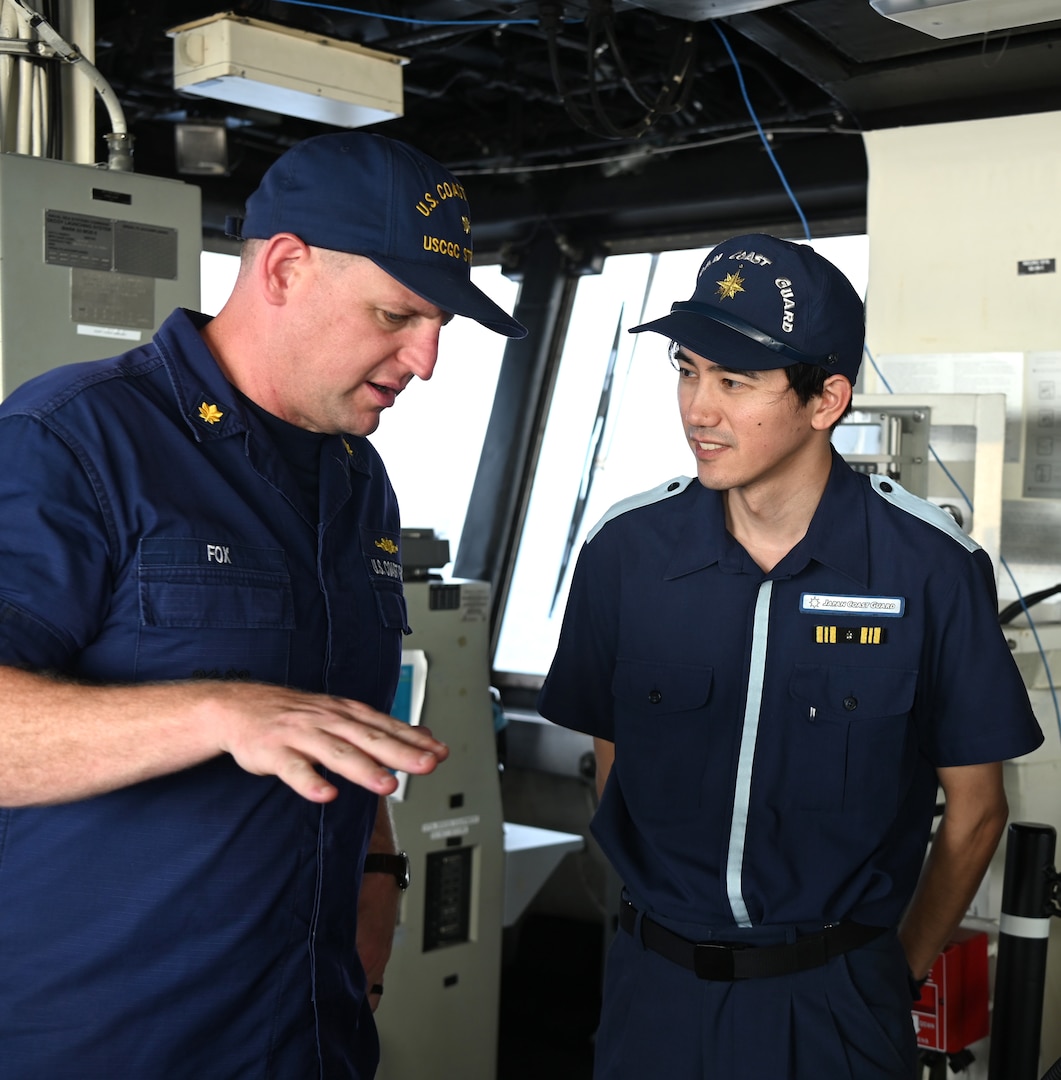
Lt. Cmdr. Ryan Fox, U.S. Coast Guard Cutter Stratton’s (WMSL 752) operation’s officer, speaks with a Japan Coast Guard servicemember sailing aboard the Stratton as the U.S., Japan and Philippine Coast Guards conduct combined operations in the South China Sea, June 5, 2023. Stratton’s crew are participating in the first trilateral engagements between the sea services while deployed to the Western Pacific to operate with regional allies and partner nations, reinforcing a rules-based order and maritime governance to promote a free and open Indo-Pacific. (U.S. Coast Guard photo by Chief Petty Officer Matt Masaschi)
U.S. Coast Guard Cutter Stratton Conducts Damage Control Drills as Part of Trilateral Engagement with Japan and Philippine Coast Guards
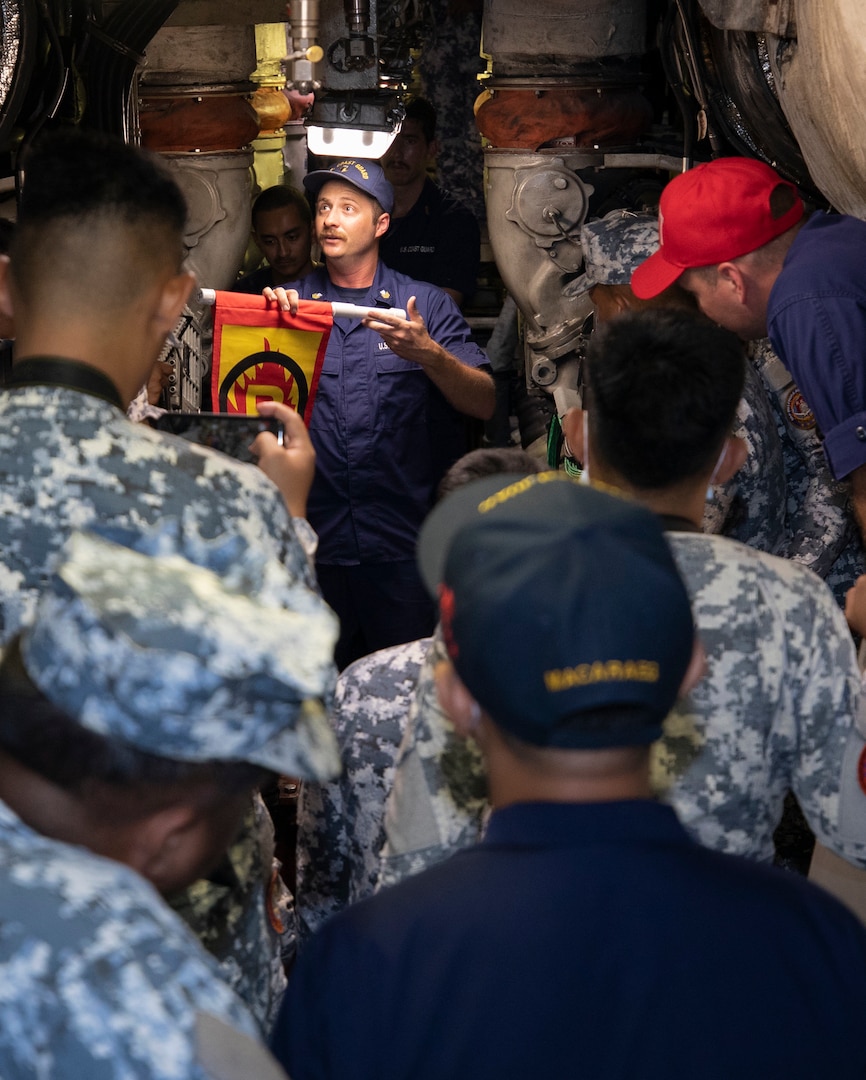
Petty Officer 1st Class Jeremiah Randolph, a damage controlman attached to U.S. Coast Guard Cutter Stratton (WMSL 752), explains how his damage control team conducts drills as part of a trilateral exercise with the Japan and Philippine coast guards in Manila, Philippines, June 4, 2023. Stratton deployed to the Western Pacific to conduct engagements with regional allies and partner nations, reinforcing a rules-based order in the maritime domain. (U.S. Navy photo by Chief Petty Officer Brett Cote)
Philippine Coast Guard hosts collaborative mission planning meet
A Philippine Coast Guard service member positions a model ship during a collaborative mission planning meeting with members from the U.S. Coast Guard Cutter Stratton (WMSL 752), the Japan Coast Guard Vessel Akitsushima (PLH 32) and the Philippine Coast Guard, before departing Manila, Philippines, to conduct joint at-sea operations, June 3, 2023. Stratton deployed to the Western Pacific to engage with regional allies and partner nations, reinforcing a rules-based order and maritime governance to promote a free and open Indo-Pacific. (U.S. Coast Guard photo by Chief Petty Officer Matt Masaschi)
Japan Coast Guard hosts working luncheon for U. S. and Philippin
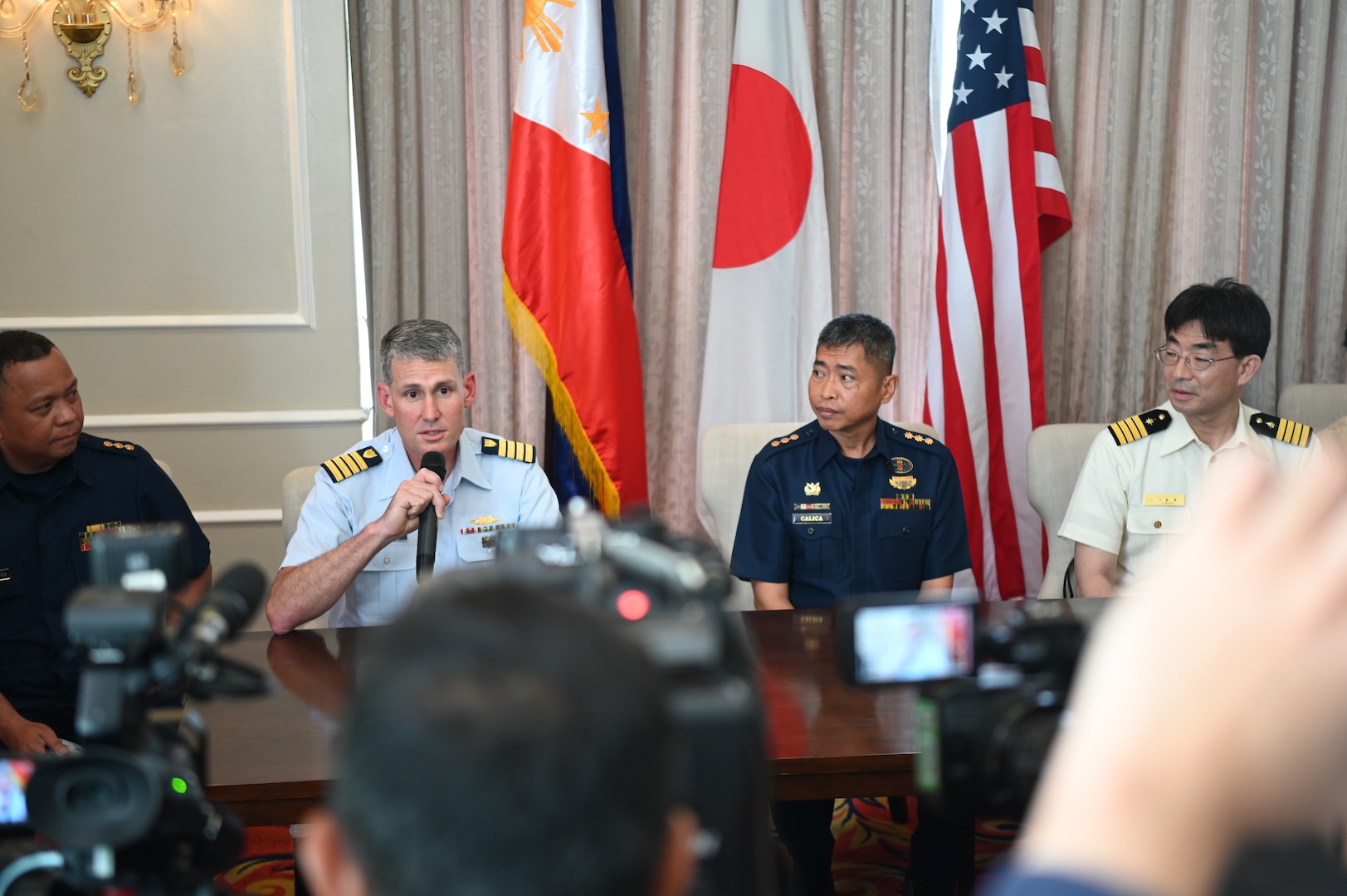
Capt. Brian Krautler, U.S. Coast Guard Cutter Stratton’s (WMSL 752) commanding officer, speaks to media during a press briefing about the scheduled at-sea joint operations planned for Stratton, the Japan Coast Guard Vessel Akitsushima (PLH 32), and the Philippine Coast Guard after departing Manila, Philippines, June 3, 2023. Stratton deployed to the Western Pacific to conduct engagements with regional allies and partner nations, reinforcing a rules-based order in the maritime domain. (U.S. Coast Guard photo by Chief Petty Officer Matt Masaschi)
U.S. Coast Guard Cutter Stratton plays basketball tournament with Japan and Philippine coast guards
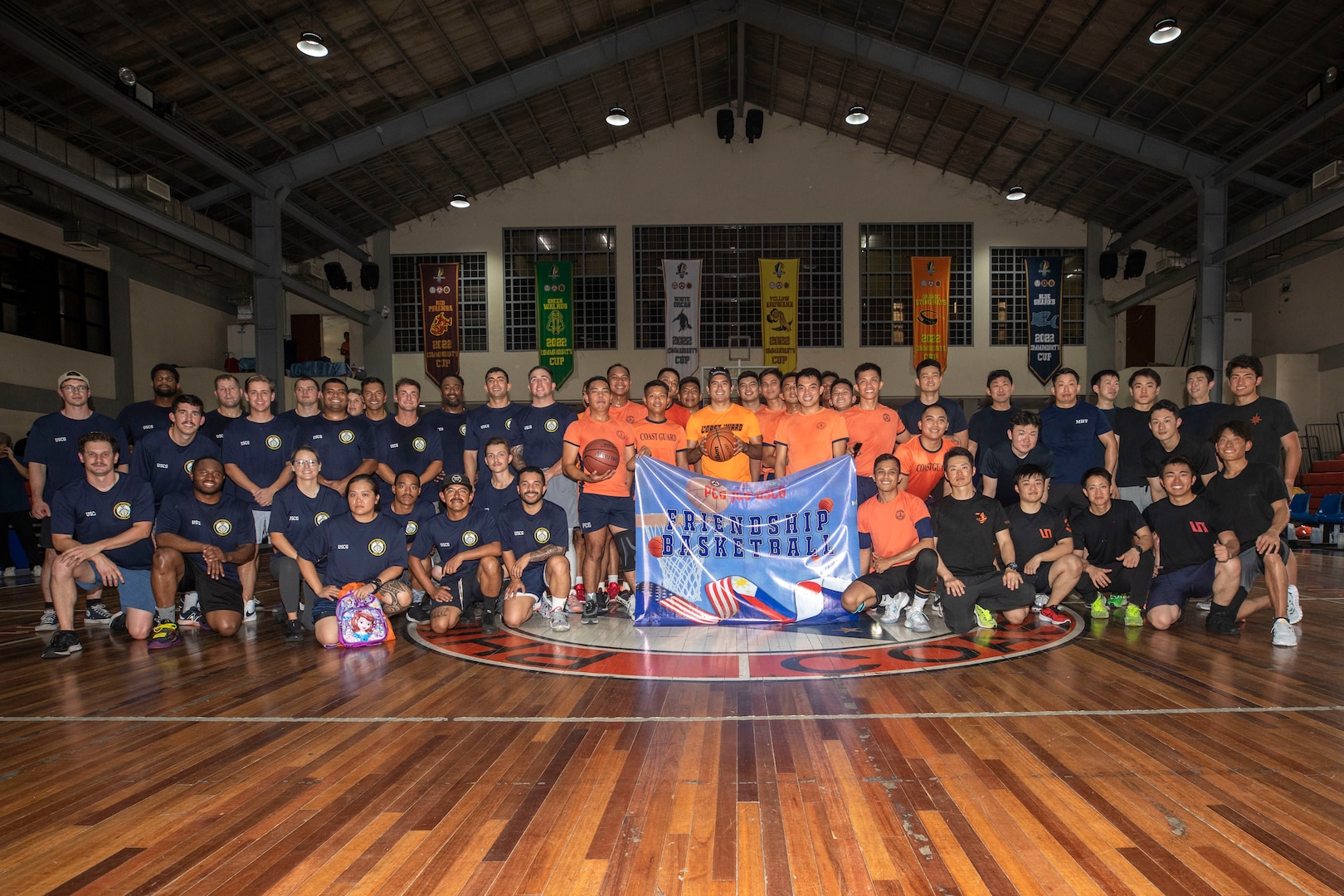
(From left) Sailors from U.S. Coast Guard Cutter Stratton (WMSL 752), the Philippine Coast Guard, and Japan Coast Guard Vessel Akitsushima (PLH 32) take part in a basketball tournament in Manila, Philippines, June 2 before beginning a multi-day trilateral exercise. Stratton deployed to the Western Pacific to conduct engagements with regional allies and partner nations, reinforcing a rules-based order in the maritime domain. (U.S. Navy photo by Chief Petty Officer Brett Cote)
U.S. Coast Guard Cutter Stratton hosts shipboard dinner to commemorate trilateral engagement
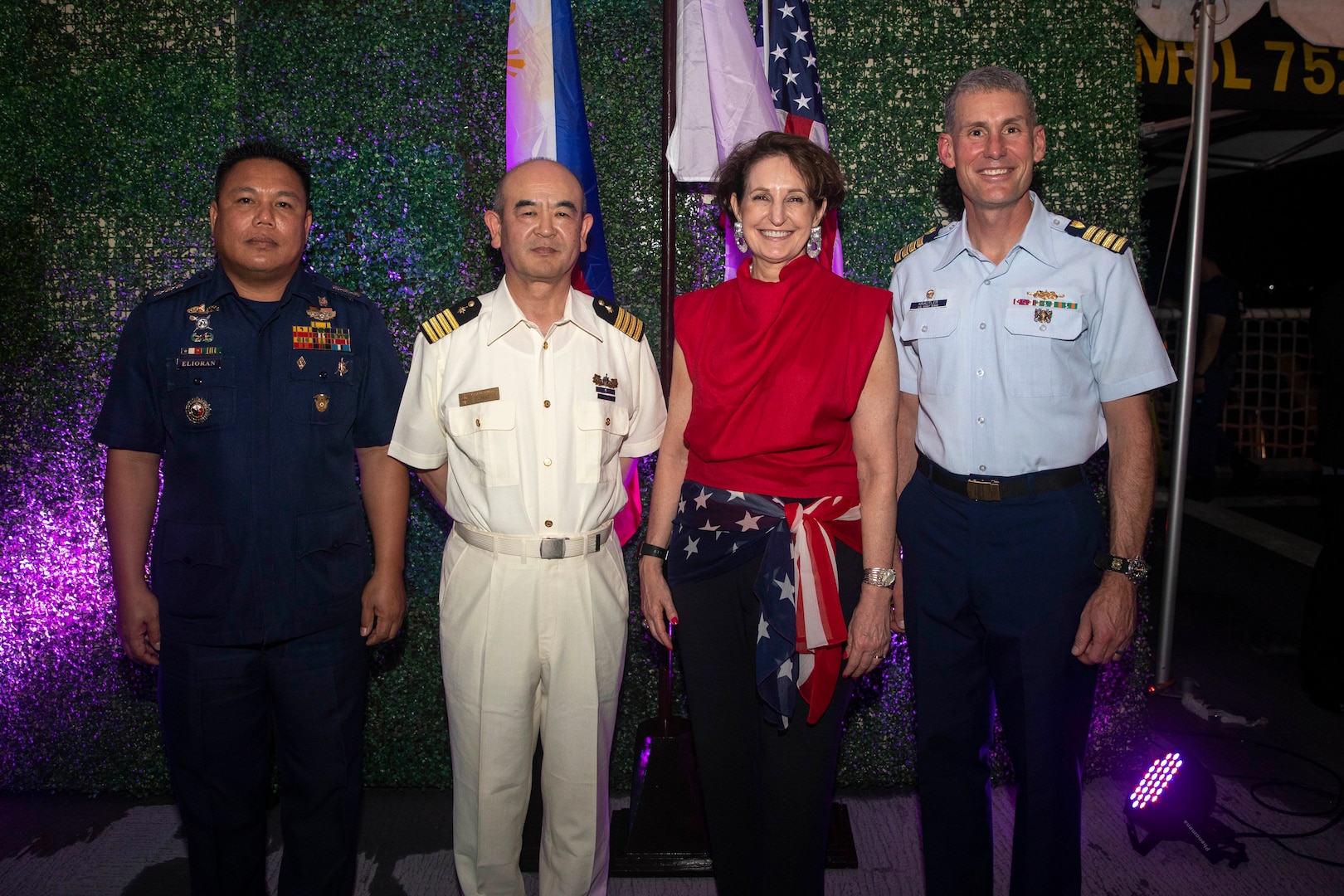
(From right) Capt. Brian Krautler, commanding officer of U.S. Coast Guard Cutter Stratton (WMSL 752), Ambassador MaryKay L. Carlson, U.S. ambassador to the Republic of the Philippines, Capt. Toru Imai, commanding officer of Japan Coast Guard Vessel Akitsushima (PLH 32), and Philippine Coast Guard Capt. Roderik Elorian, stand together arm-in-arm at a dinner aboard Stratton in Manila, Philippines, June 2, 2023, to commemorate a multi-day trilateral engagement with the three services. Stratton deployed to the Western Pacific to conduct engagements with regional allies and partner nations, reinforcing a rules-based order in the maritime domain. (U.S. Navy photo by Chief Petty Officer Brett Cote)
/ Published June 9, 2023
MANILA, Philippines — The U.S. Coast Guard Cutter Stratton (WMSL 752) and crew departed the Philippines Thursday following the first trilateral engagements between the U.S., Philippine, and Japan Coast Guards.
Stratton’s crew conducted professional exchanges and joint operations in port and at sea with the Japan Coast Guard Vessel Akitsushima (PLH 32) and the Philippine Coast Guard during Stratton’s months-long Indo-Pacific deployment.
Stratton, the Akitsushima and Philippine Coast Guard vessels Gabriela Silang, and Melchora Aquino spent three days at sea off the coast of Bataan, Philippines, executing simulated search-and-rescue scenarios, maritime law enforcement boardings, passing exercises, and formation maneuvering drills. Additionally, they conducted communications and signaling drills, crew professional exchanges and joint boat and air operations following their Manila port visit.
While in Manila, members from the three services conducted combined damage control training, executed cooperative mission planning and table-top exercises ahead of at-sea combined operations. They conducted crew exchanges and toured partner vessels, participated in a women-in-law-enforcement discussion panel, played in a basketball tournament, volunteered at a beach cleanup, visited a children’s hospital and gathered for social receptions.
“It was an honor for Stratton to come together with our Philippine and Japan Coast Guard allies to learn from each other, work together to address common challenges and enhance our interoperability for joint maritime operations,” said U.S. Coast Guard Capt. Brian Krautler, Stratton’s commanding officer. “The experiences gained from our multi-mission trilateral operations underway, our professional exchanges in port and the relationships forged over the last week have been invaluable enablers for the U.S. Coast Guard and our allies to secure a continued free and open Indo-Pacific.”
The multi-day trilateral engagement was named “Kaagapay,” a Filipino word meaning “standing side by side.”
The relationship between the United States Coast Guard and Philippine Coast Guard was built over many years of partnership between the two services. The relationship flourished through the Philippine cadet exchange program at the U.S. Coast Guard Academy, U.S. Coast Guard mobile training team deployments to the Philippines, Philippine Coast Guard Officer enrollment in the U.S. Coast Guard’s Maritime Law Enforcement Academy, engagements by U.S. Coast Guard Cutter Midgett (WMSL 757) and U.S. Coast Guard Cutter Munro (WMSL 755) in Manila in recent years and Stratton’s subsequent participation in the first trilateral USCG, PCG, and JCG training operation. The U.S. and Philippine Coast Guard’s partnership has solidified the commitment of both services to upholding a rules-based order in the maritime domain.
The engagement was another SAPPHIRE touchpoint between the U.S. and Japan Coast Guards. In 2022, Operation SAPPHIRE was established through a memorandum of cooperation between the U.S. and Japan Coast Guards as a perpetual operation to strengthen relationships, increase bilateral engagements, and focus on maintaining a free and open Indo-Pacific.
Operating under the tactical control of Commander, U.S. 7th Fleet, Stratton’s crew will engage in professional and subject matter expert exchanges with partners and allies throughout the Indo-Pacific during their months-long patrol to the region.
The U.S. Coast Guard maintains steadfast partnerships and strives for persistent presence in the Indo-Pacific region. Stratton’s current Indo-Pacific patrol is the cutter’s second patrol in the region and one of seven national security cutter deployments to the Indo-Pacific since 2019.
The Coast Guard provides expertise in all aspects of maritime governance, within the mission sets of: search and rescue; illegal, unreported, and unregulated fishing; maritime environmental response; maritime security; maritime domain awareness; maritime aviation operations; and humanitarian assistance and disaster relief.
Commissioned in 2012, Stratton is one of four Coast Guard legend-class national security cutters homeported in Alameda, California. National security cutters are 418-feet long, 54-feet wide, and have a 4,600 long-ton displacement. They have a top speed in excess of 28 knots, a range of 12,000 nautical miles, endurance of up to 90 days and can hold a crew of up to 170.
National security cutters feature advanced command and control capabilities, aviation support facilities, stern cutter boat launch and increased endurance for long-range patrols to disrupt threats to national security further offshore.
U.S. Coast Guard Pacific Area is responsible for U. S. Coast Guard operations spanning across six of the seven continents, 71 countries and more than 74 million square miles of ocean. It reaches from the shores of the West Coast of the United States to the Indo-Pacific, Eastern Pacific, Arctic and Antarctic regions. Pacific Area strives to integrate capabilities with partners to ensure collaboration and unity of effort throughout the Pacific.
-USCG-